Our News
Should You Give an Insurer a Recorded Statement?
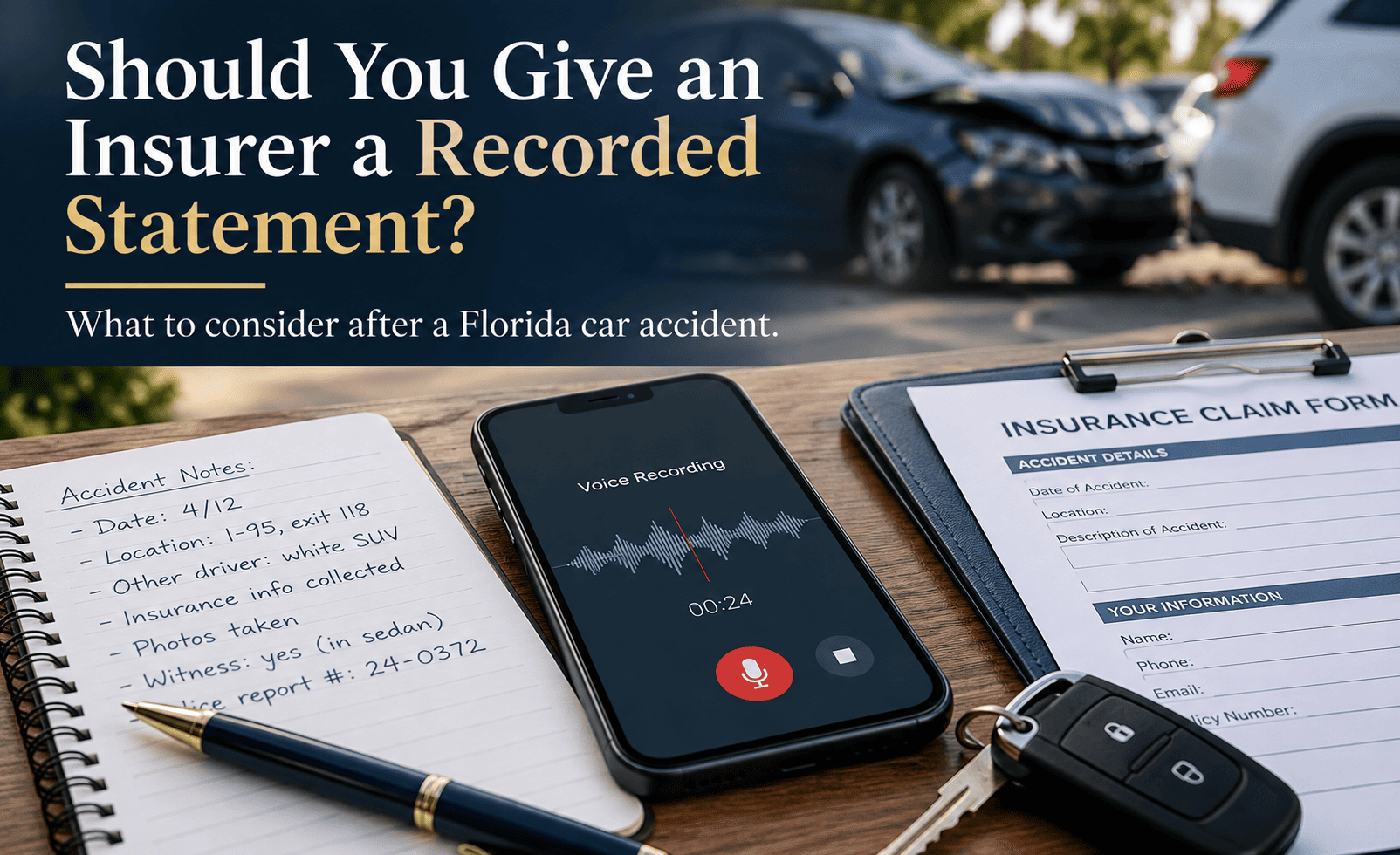
A request for a recorded statement can come soon after a Florida car accident, sometimes before you have had much time to process what happened. If you are asked to give a recorded statement to an insurance company, it helps to understand why the insurer wants it and how your answers may become part of the claim record. In this blog, Hicks & Motto explains what to consider before responding and how to prepare if a statement is required.
Why Do Insurance Companies Request Recorded Statements?
Insurance companies often request recorded statements shortly after an accident. The primary reason for this is to gather information quickly while the incident is still fresh in your memory. However, there are other reasons:
- Establishing Facts: Insurers want to establish the facts of the incident from your perspective. This helps them assess liability and determine the extent of their financial responsibility.
- Identifying Inconsistencies: By obtaining a recorded statement, insurance companies can compare your account with other evidence or statements to identify inconsistencies that may undermine your claim.
- Minimizing Payouts: Ultimately, insurance companies are businesses. They aim to minimize payouts, and a recorded statement can be used to dispute or reduce the value of your claim.
The Risks of Providing a Recorded Statement
While it might seem straightforward to provide a recorded statement, doing so without proper preparation can pose several risks:
1. Unintended Admissions
During a recorded statement to an insurance company, you might unintentionally say something that can be interpreted as an admission of fault or liability. Even seemingly innocuous comments can be used against you.
2. Inaccuracies and Omissions
Recounting an accident can be challenging, especially when you’re still processing the event. Any inaccuracies or omissions in your statement can be highlighted by the insurance company to challenge your credibility.
3. Pressure from Insurance Adjusters
Insurance adjusters are skilled at asking leading questions to elicit responses that favor the insurer’s interests. Without legal guidance, you might find yourself agreeing to statements that don’t accurately reflect your experience.
When Should You Consider Giving a Recorded Statement?
While it’s generally wise to be cautious about providing a recorded statement, there are scenarios where it might be appropriate:
1. Legal Guidance
Before agreeing to a recorded statement, consult with a personal injury attorney. They can help you understand the potential implications and prepare you for the process. At Hicks & Motto Law Firm, we offer guidance to ensure your rights are protected.
2. Clarity of Events
If the details of the accident are well documented and you have documented evidence to support your account, you might consider giving a recorded statement. However, it’s still important to have legal counsel present.
3. Cooperation with Your Insurer
If the request comes from your own insurance company, cooperation might be necessary, especially if your policy includes a cooperation clause. Even so, it’s wise to have legal advice to ensure your statement doesn’t inadvertently harm your claim.
How to Prepare for a Recorded Statement
If you decide to provide a recorded statement, preparation is key. Here are steps to help you prepare:
- Review the Accident Details: Go over the accident report, photographs, and any other evidence to refresh your memory.
- Consult with Your Attorney: Work with your attorney to review likely questions and formulate clear, concise responses.
- Remain Calm and Composed: During the statement, stay calm and take your time answering questions. It’s okay to pause and think before responding.
- Avoid Speculation: Stick to the facts and avoid speculating or guessing about details you’re unsure of.
The Role of Legal Support in Navigating Insurance Claims
Having legal support can help with the process in how your insurance claim is handled. An experienced attorney can:
- Provide Expert Advice: They can guide you through the process and ensure you understand your rights and options.
- Negotiate with Insurers: Attorneys can negotiate with insurance companies on your behalf to seek fair compensation.
- Protect Your Interests: Legal representation ensures that your statements and actions don’t create problems for your claim.
Weighing the Decision Carefully
Deciding whether to give a recorded statement to an insurance company after a car accident in Florida requires careful consideration. While cooperation is sometimes necessary, it’s essential to protect your interests and avoid possible problems. Hicks & Motto Law Firm can provide the guidance you need to handle the process. Remember, your statements can significantly impact the outcome of your claim, so take the time to prepare and seek expert advice.
If you’re facing a request for a recorded statement or have questions about your car accident claim, don’t hesitate to reach out to us at Hicks & Motto Law Firm. Our experienced team is here to help you understand your rights and pursue the compensation you deserve.
 Back to all news