
Free consultation

Dog Bites

Dog Bite Attorney West Palm Beach

Dog Bites: A Serious Concern

Dog bites are a common source of injury, with approximately 4.5 million incidents occurring each year in the United States, according to the Centers for Disease Control and Prevention (CDC). In 2015, dog bites and related injuries accounted for more than one-third of all homeowners insurance liability claim dollars, totaling over $570 million (Dog Bite Liability by Insurance Information Institute, 2016).

Every day, about 1,000 people require emergency medical care for dog bite injuries. The underlying cause of many preventable dog bites is owner negligence. Dog Bite Attorney West Palm Beach emphasizes the importance of holding negligent dog owners accountable.

Causes of Preventable Dog Bites

Preventable dog bites and animal attacks often result from the negligent actions or inactions of dog owners. Some common examples of negligence include failing to:
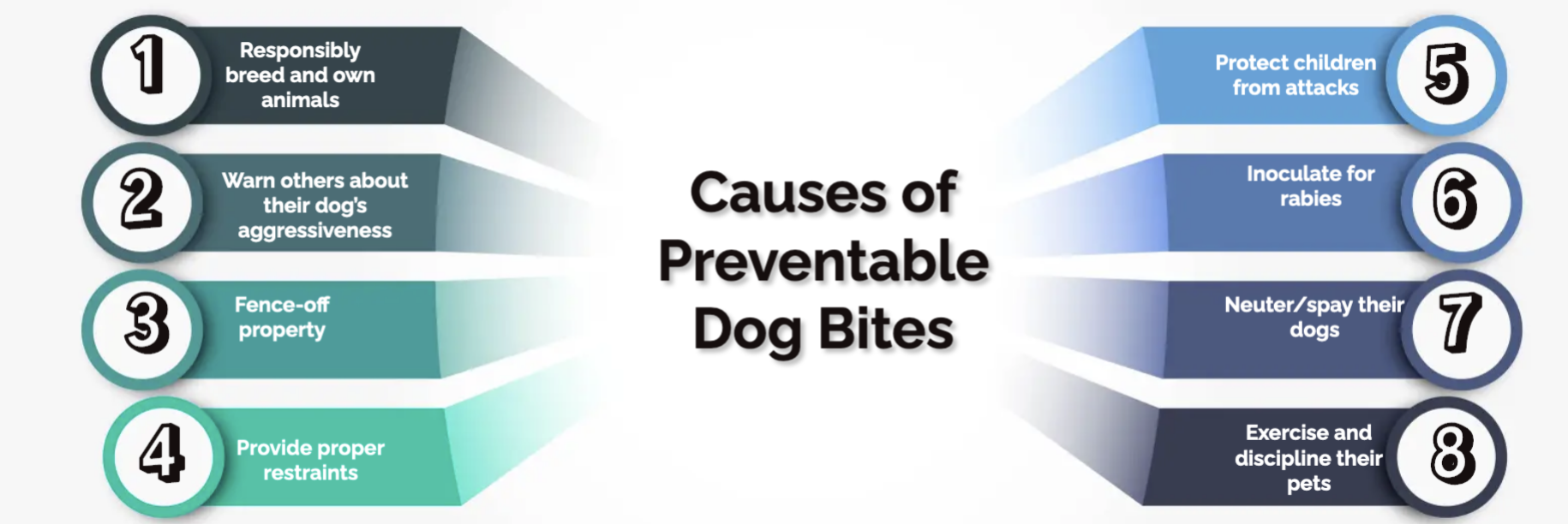
  • Responsibly breed and own animals
  • Warn others about their dog’s aggressiveness
  • Fence-off property
  • Provide proper restraints
  • Protect children from attacks
  • Inoculate for rabies
  • Neuter/spay their dogs
  • Exercise and discipline their pets
Dog Bites

Florida Laws on Dog Bite Liability

Under Florida statutes, a dog owner is liable for damages to all “persons bitten.” This law applies to any dog that bites a person in a public or private place, including the owner’s property. Even if the victim is partially negligent in provoking the attack, Florida courts will apportion a percentage of fault to the victim and subtract it from the owner’s total liability. Therefore, dog bite victims may still recover compensation even if they share some fault for the incident.

Premises Liability and Vicious Pets

Florida’s premises liability law requires property owners to warn invitees and other guests of vicious pets, as these animals pose a dangerous condition on the property. Failure to do so makes the owner liable for damages to anyone lawfully on their property, whether performing a legal duty or upon the express or implied invitation of the owner.

Seeking Compensation for Dog Bite Victims

At Dog Bite Attorney West Palm Beach, we have successfully assisted victims of unprovoked dog attacks in receiving compensation for their physical injuries, scars, and the emotional trauma caused by these attacks. Our goal is to ensure that victims are fairly compensated for their suffering and losses.

Contact Us

If you or a loved one has been a victim of a dog bite, please contact Dog Bite Attorney West Palm Beach for a free personal injury consultation. Our experienced team is here to help you navigate the legal process and secure the compensation you deserve.

Dog Bite FAQs

Do I have a dog bite case?

You may have a dog bite case if a dog bit or attacked you and caused physical injuries, scarring, medical expenses, lost income, or other damages.

Florida law generally holds a dog owner responsible when their dog bites someone in a public place or while the person is lawfully on private property. The injured person does not necessarily have to prove that the dog had bitten someone before or that the owner knew the dog was dangerous. 

When evaluating a potential dog bite claim, we consider:

  • Where the attack occurred
  • Whether you were lawfully on the property
  • Whether the dog bit you or caused another type of injury
  • Whether the owner or another party controlled the dog
  • Whether warning signs were posted
  • Whether provocation is alleged
  • Whether the incident caused your injuries and damages
  • Whether photographs, medical records, witness statements, animal-control reports, or other evidence support the claim
  • Whether homeowners, renters, or another insurance policy may cover the loss

Dog-bite cases are fact-specific. An attorney can review the circumstances and determine which parties and legal claims may apply.

The value of a dog bite case usually cannot be determined at the beginning. The amount depends on the severity of the injuries, treatment, long-term effects, evidence, insurance coverage, and whether the injured person is alleged to share responsibility.

Factors that may affect the value include:

  • Emergency treatment and past medical expenses
  • Future medical care
  • Plastic or reconstructive surgery
  • Permanent scarring or disfigurement
  • Nerve, muscle, or tissue damage
  • Infection
  • Lost wages
  • Reduced earning capacity
  • Physical pain and emotional suffering
  • Psychological treatment
  • Fear, anxiety, or trauma following the attack
  • The location and visibility of scars
  • Your percentage of responsibility, if any
  • Available insurance coverage

Dog bites involving the face, hands, children, permanent scarring, or psychological trauma may have lasting consequences. A settlement should be evaluated only after the current and reasonably anticipated future effects are understood.

Many Florida dog bite lawsuits must generally be filed within two years of the incident. The exact deadline can depend on when the attack occurred, the legal claims involved, the injured person’s circumstances, and the identity of the responsible party. 

Different rules or notice requirements may apply when:

  • The attack occurred before Florida’s 2023 limitations-law change
  • A government agency or public entity may be responsible
  • The victim is a minor
  • The attack resulted in wrongful death
  • Another exception applies

You should not wait until the filing deadline approaches. Photographs should be taken while wounds are visible, surveillance footage may be deleted, witnesses may become difficult to locate, and insurance coverage may take time to investigate.

Your conduct may affect the amount of compensation you can recover, but it does not automatically eliminate the claim.

Florida’s dog-bite statute provides that negligence by the injured person may reduce the dog owner’s liability according to the injured person’s percentage of fault. The dog owner may also raise issues such as provocation, trespassing, ignoring warnings, or interacting with the dog in an unsafe manner. 

Factors that may be considered include whether you:

  • Provoked or frightened the dog
  • Ignored a clear warning
  • Entered private property without permission
  • Interfered with the dog while it was eating or protecting puppies
  • Continued approaching after being told to stop
  • Were too young to understand a warning or appreciate the risk

The dog owner’s conduct must also be considered, including whether the dog was properly restrained, supervised, or controlled. Do not assume you have no claim merely because the owner or insurer alleges that you contributed to the attack.

Many Florida dog bite cases are handled on a contingency-fee basis. This generally means the lawyer receives an agreed percentage of the compensation recovered through a settlement or verdict.

If no compensation is recovered, no attorney’s fee is generally owed under the contingency agreement. Attorney’s fees and case expenses are different, however.

Potential case expenses may include:

  • Court filing fees
  • Medical-record charges
  • Deposition expenses
  • Investigator fees
  • Expert-witness fees
  • Animal-control records
  • Medical or psychological evaluations

The fee agreement should be in writing and explain the percentage charged, how expenses will be handled, and whether the client may be responsible for costs if there is no recovery. Florida does not require every attorney to charge the same percentage. (The Florida Bar)

Do not accept a dog bite settlement or sign a release until you understand the full extent of your injuries, scarring, future treatment, emotional effects, and financial losses.

Before accepting an offer, consider:

  • Whether your wounds have fully healed
  • Whether permanent scarring is visible
  • Whether plastic or reconstructive surgery may be recommended
  • Whether nerve, tendon, or tissue damage remains
  • Whether infection or other complications developed
  • Whether psychological treatment may be needed
  • Whether you missed work or lost income
  • Whether all medical bills and liens have been identified
  • Whether all available insurance policies have been investigated
  • Whether the offer accounts for future damages
  • Which claims and parties would be released

A scar may change significantly while it heals, and the need for additional treatment may not be known immediately. Once a settlement is accepted and a release is signed, the covered claim generally cannot be reopened because the injuries or scarring later prove more serious than expected.

There is no fixed timeline for resolving a dog bite case. Some claims settle within several months, while disputed or litigated cases may take considerably longer.

The timeline may depend on:

  • The severity of the wounds
  • The length of medical treatment
  • Whether the scarring has stabilized
  • Whether future surgery is recommended
  • Whether the owner disputes responsibility
  • Whether provocation or trespassing is alleged
  • Whether the dog owner can be identified
  • Whether insurance coverage is available
  • Whether a landlord, property owner, or another party may share responsibility
  • How quickly medical and animal-control records can be obtained
  • Whether a lawsuit must be filed
  • Court scheduling
  • Whether mediation or trial is required

Settling before the injuries and scars have sufficiently healed may make it difficult to account for future treatment and permanent disfigurement.

The damages available depend on the injuries, financial losses, evidence, degree of fault, and available insurance coverage.

A dog bite claim may include compensation for:

  • Emergency treatment
  • Past medical expenses
  • Reasonably anticipated future medical expenses
  • Plastic or reconstructive surgery
  • Treatment for infection
  • Psychological counseling
  • Lost wages
  • Reduced future earning capacity
  • Permanent scarring or disfigurement
  • Nerve or tissue damage
  • Physical pain and suffering
  • Emotional distress
  • Fear, anxiety, or trauma
  • Loss of enjoyment of life
  • Damage to clothing or personal property

Medical photographs, treatment records, wage documentation, expert opinions, witness statements, and evidence of permanent scarring may help establish these losses.

Most dog bite claims are resolved without a trial, but settlement is not guaranteed.

A case may proceed toward trial when:

  • The owner denies that the dog caused the injuries
  • The parties dispute who owned or controlled the dog
  • The owner alleges provocation
  • The owner claims the injured person was trespassing
  • The insurer disputes the severity or permanence of the scars
  • The insurer argues that treatment was unnecessary
  • Insurance coverage is disputed
  • Multiple responsible parties blame one another
  • The insurer refuses to make a reasonable settlement offer
  • Mediation and settlement negotiations are unsuccessful

Even when settlement appears likely, the case should be prepared as though it may go to trial. Medical records, photographs documenting how the injuries and scars changed over time, animal-control reports, witness testimony, and insurance evidence may all be important.

We use cookies to personalise content and ads, to provide social media features and to analyse our traffic. We also share information about your use of our site with our social media, advertising and analytics partners.
Cookies settings
Accept
Privacy & Cookie policy
Privacy & Cookies policy
Cookie name Active

Privacy Policy

What information do we collect?

We collect information from you when you register on our site or place an order. When ordering or registering on our site, as appropriate, you may be asked to enter your: name, e-mail address or mailing address.

What do we use your information for?

Any of the information we collect from you may be used in one of the following ways: To personalize your experience (your information helps us to better respond to your individual needs) To improve our website (we continually strive to improve our website offerings based on the information and feedback we receive from you) To improve customer service (your information helps us to more effectively respond to your customer service requests and support needs) To process transactions Your information, whether public or private, will not be sold, exchanged, transferred, or given to any other company for any reason whatsoever, without your consent, other than for the express purpose of delivering the purchased product or service requested. To administer a contest, promotion, survey or other site feature To send periodic emails The email address you provide for order processing, will only be used to send you information and updates pertaining to your order.

How do we protect your information?

We implement a variety of security measures to maintain the safety of your personal information when you place an order or enter, submit, or access your personal information. We offer the use of a secure server. All supplied sensitive/credit information is transmitted via Secure Socket Layer (SSL) technology and then encrypted into our Payment gateway providers database only to be accessible by those authorized with special access rights to such systems, and are required to?keep the information confidential. After a transaction, your private information (credit cards, social security numbers, financials, etc.) will not be kept on file for more than 60 days.

Do we use cookies?

Yes (Cookies are small files that a site or its service provider transfers to your computers hard drive through your Web browser (if you allow) that enables the sites or service providers systems to recognize your browser and capture and remember certain information We use cookies to help us remember and process the items in your shopping cart, understand and save your preferences for future visits, keep track of advertisements and compile aggregate data about site traffic and site interaction so that we can offer better site experiences and tools in the future. We may contract with third-party service providers to assist us in better understanding our site visitors. These service providers are not permitted to use the information collected on our behalf except to help us conduct and improve our business. If you prefer, you can choose to have your computer warn you each time a cookie is being sent, or you can choose to turn off all cookies via your browser settings. Like most websites, if you turn your cookies off, some of our services may not function properly. However, you can still place orders by contacting customer service. Google Analytics We use Google Analytics on our sites for anonymous reporting of site usage and for advertising on the site. If you would like to opt-out of Google Analytics monitoring your behaviour on our sites please use this link (https://tools.google.com/dlpage/gaoptout/)

Do we disclose any information to outside parties?

We do not sell, trade, or otherwise transfer to outside parties your personally identifiable information. This does not include trusted third parties who assist us in operating our website, conducting our business, or servicing you, so long as those parties agree to keep this information confidential. We may also release your information when we believe release is appropriate to comply with the law, enforce our site policies, or protect ours or others rights, property, or safety. However, non-personally identifiable visitor information may be provided to other parties for marketing, advertising, or other uses.

Registration

The minimum information we need to register you is your name, email address and a password. We will ask you more questions for different services, including sales promotions. Unless we say otherwise, you have to answer all the registration questions. We may also ask some other, voluntary questions during registration for certain services (for example, professional networks) so we can gain a clearer understanding of who you are. This also allows us to personalise services for you. To assist us in our marketing, in addition to the data that you provide to us if you register, we may also obtain data from trusted third parties to help us understand what you might be interested in. This ‘profiling’ information is produced from a variety of sources, including publicly available data (such as the electoral roll) or from sources such as surveys and polls where you have given your permission for your data to be shared. You can choose not to have such data shared with the Guardian from these sources by logging into your account and changing the settings in the privacy section. After you have registered, and with your permission, we may send you emails we think may interest you. Newsletters may be personalised based on what you have been reading on theguardian.com. At any time you can decide not to receive these emails and will be able to ‘unsubscribe’. Logging in using social networking credentials If you log-in to our sites using a Facebook log-in, you are granting permission to Facebook to share your user details with us. This will include your name, email address, date of birth and location which will then be used to form a Guardian identity. You can also use your picture from Facebook as part of your profile. This will also allow us and Facebook to share your, networks, user ID and any other information you choose to share according to your Facebook account settings. If you remove the Guardian app from your Facebook settings, we will no longer have access to this information. If you log-in to our sites using a Google log-in, you grant permission to Google to share your user details with us. This will include your name, email address, date of birth, sex and location which we will then use to form a Guardian identity. You may use your picture from Google as part of your profile. This also allows us to share your networks, user ID and any other information you choose to share according to your Google account settings. If you remove the Guardian from your Google settings, we will no longer have access to this information. If you log-in to our sites using a twitter log-in, we receive your avatar (the small picture that appears next to your tweets) and twitter username.

Children’s Online Privacy Protection Act Compliance

We are in compliance with the requirements of COPPA (Childrens Online Privacy Protection Act), we do not collect any information from anyone under 13 years of age. Our website, products and services are all directed to people who are at least 13 years old or older.

Updating your personal information

We offer a ‘My details’ page (also known as Dashboard), where you can update your personal information at any time, and change your marketing preferences. You can get to this page from most pages on the site – simply click on the ‘My details’ link at the top of the screen when you are signed in.

Online Privacy Policy Only

This online privacy policy applies only to information collected through our website and not to information collected offline.

Your Consent

By using our site, you consent to our privacy policy.

Changes to our Privacy Policy

If we decide to change our privacy policy, we will post those changes on this page.
Save settings
Cookies settings