Free consultation

Personal injury lawyers in Palm Beach Gardens

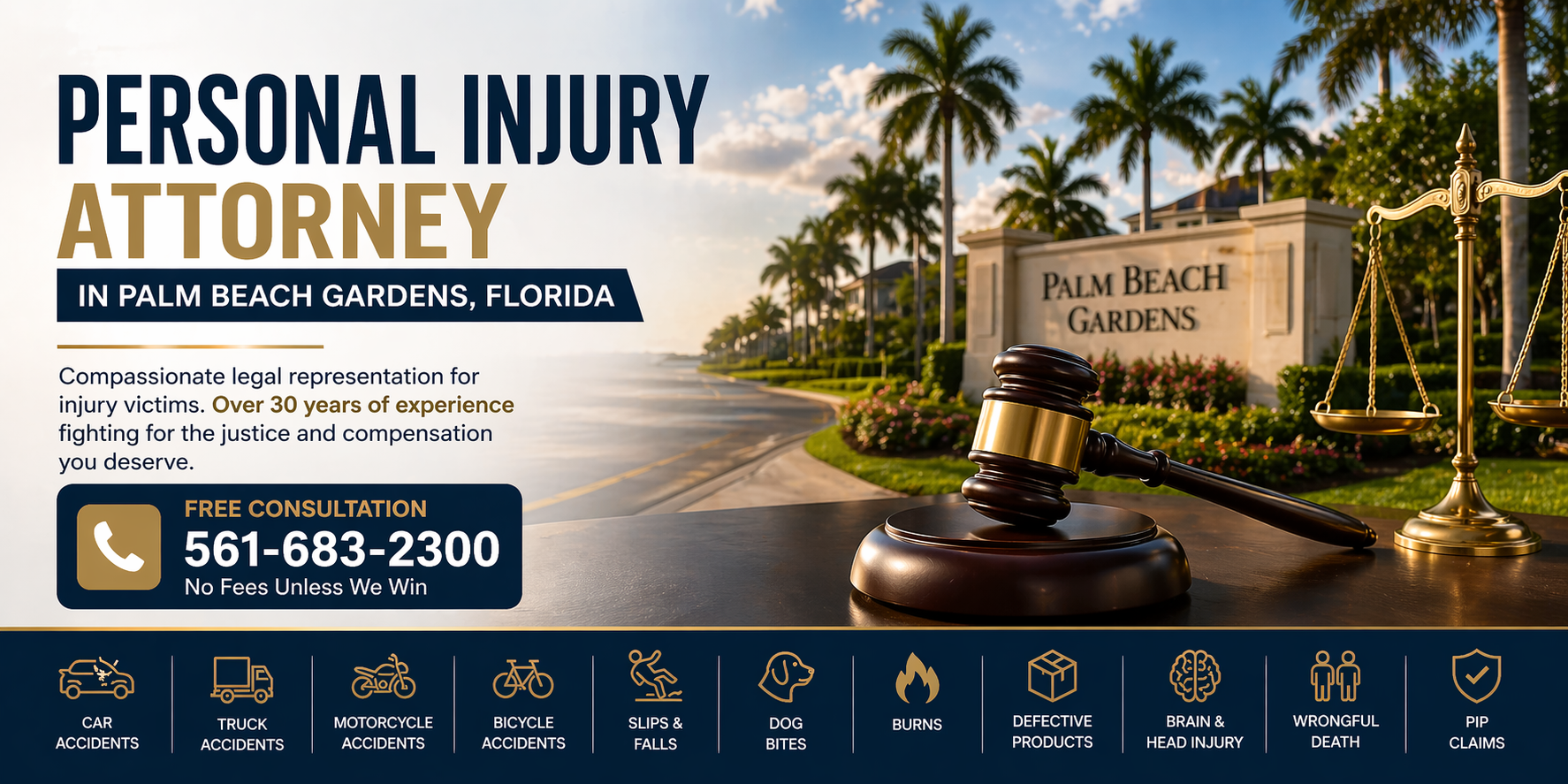
Personal Injury Attorney in Palm Beach Gardens, Florida

When an injury happens because of someone else’s negligence, the impact can go far beyond the accident itself. Medical treatment, time away from work, and uncertainty about what comes next can quickly become overwhelming.

At Hicks & Motto, we provide legal representation for individuals in Palm Beach Gardens, Florida who have been injured and need guidance on how to move forward. With more than 30 years of experience handling personal injury cases, our focus is on helping clients understand their situation and pursue fair compensation.

Call 561-683-2300 to schedule a free consultation.

How Personal Injury Claims Are Handled

A personal injury case begins with understanding what happened and who may be responsible. From there, the process typically involves:

  • Reviewing the details of the incident
  • Gathering documentation and evidence
  • Evaluating injuries and related losses
  • Communicating with insurance providers
  • Resolving the claim through negotiation or litigation

Each case follows its own path, depending on the circumstances involved.

Why Clients Choose Hicks & Motto

Choosing legal representation is an important decision. Hicks & Motto approaches every case with a focus on clarity, consistency, and attention to detail.

Clients work directly with an attorney throughout their case and receive:

  • Over 30 years of personal injury experience
  • Personalized attention at every stage
  • A dedicated legal team supporting the case
  • A proven track record of results
  • Free consultations with no upfront obligation

Every case is handled with the understanding that it matters to the person involved—not just the outcome.

Trial Experience:

Unlike many personal injury law firms, we are not afraid to take cases to trial. Our attorneys have extensive experience in the courtroom and are prepared to fight for your rights every step of the way.

Personalized Attention:

When you choose Hicks & Motto, you will work directly with an attorney who will guide you through every stage of the legal process. We believe in open communication and will always keep you informed about the progress of your case.

Proven Results:

Our track record of success speaks for itself. We have recovered millions of dollars in compensation for our clients and are committed to achieving the best possible outcome for every case we handle.


Speak With an Attorney Today

If you’ve been injured in Palm Beach Gardens, you don’t have to handle it alone. Get clear guidance on your next steps and your legal options.

📞 Call 561-683-2300 to schedule your free consultation.
No upfront fees. No obligation.
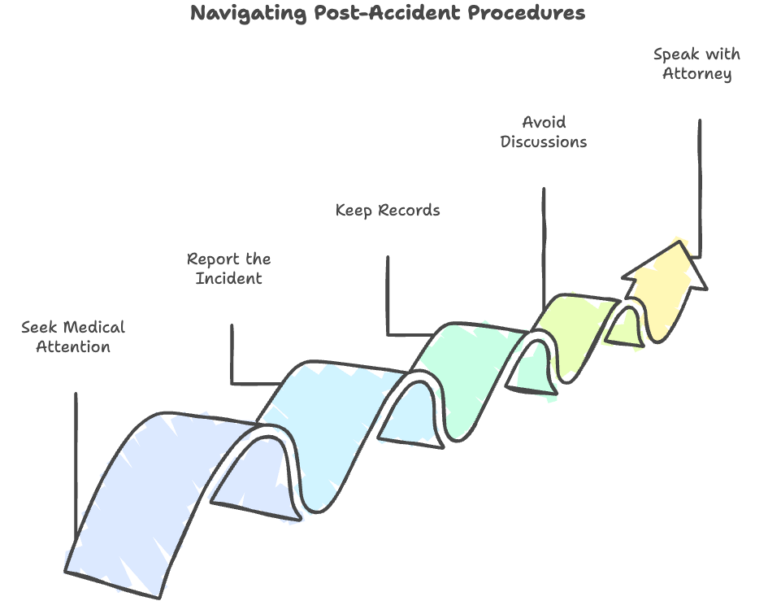
Steps to Take After an Accident

Steps to Take After an Accident

After an injury, the actions taken early can affect the outcome of a claim.

Consider the following:

  1. Seek medical attention
  2. Report the incident
  3. Keep records of treatment and expenses
  4. Avoid discussing details with insurance representatives
  5. Speak with an attorney before making decisions

Meet Your Personal Injury Lawyers in Palm Beach Gardens, FL

Frequently Asked Questions

Do I have a personal injury case?

You may have a personal injury case if another person, business, or organization acted negligently and caused you to suffer an injury and financial or personal losses. However, every claim depends on its specific facts.

When evaluating a potential personal injury claim, we consider:

  • Whether another party had a legal duty to act with reasonable care
  • Whether that party acted negligently
  • Whether the negligence directly caused your injury
  • Whether you suffered medical expenses, lost income, pain and suffering, or other damages
  • Whether photographs, medical records, witness statements, reports, or other evidence can support the claim
  • Whether insurance coverage or other sources of recovery are available

Being injured does not automatically mean someone else is legally responsible. A personal injury attorney must examine how the incident occurred, who may be liable, the available evidence, and the extent of your damages before determining whether you have a viable claim.

It is best to speak with an attorney as soon as possible after an injury.

Some cases are resolved through negotiation, while others may proceed to litigation.

A consultation can help clarify your situation and available options.

The value of a personal injury case usually cannot be determined at the beginning of the claim. A fair evaluation requires information about your injuries, medical treatment, recovery, financial losses, available insurance coverage, and the strength of the evidence.

Factors that may affect the value of a personal injury claim include:

  • The nature and severity of your injuries
  • Past medical expenses and treatment
  • Expected future medical care
  • Lost wages
  • Reduced future earning capacity
  • The duration of your recovery
  • Permanent injuries, disabilities, scarring, or disfigurement
  • Past and future pain and suffering
  • Your percentage of responsibility, if any
  • The available insurance coverage
  • Whether liability is disputed
  • The quality of the evidence supporting the claim

An early settlement offer may not account for future medical treatment or the full effect an injury may have on your work and daily life. We evaluate the complete circumstances rather than relying on an online settlement calculator or an insurer’s initial estimate.

Many Florida negligence lawsuits arising from incidents occurring on or after March 24, 2023, must generally be filed within two years. Before the 2023 change in Florida law, many negligence claims were subject to a four-year filing period. (Florida Legislature)

The correct deadline depends on several factors, including:

  • The date of the incident
  • The type of personal injury claim
  • The identity of the responsible party
  • Whether a government agency or public entity is involved
  • Whether the case involves medical malpractice or wrongful death
  • Whether an exception or special notice requirement applies

The statute of limitations is not the only deadline that may affect a claim. Evidence can disappear, surveillance footage may be erased, and witnesses may become difficult to locate. Contacting an attorney promptly can help preserve evidence and protect your right to seek compensation.

Being partially responsible does not always prevent you from recovering compensation. Florida generally follows a modified comparative negligence system.

In many negligence cases, your compensation is reduced according to your percentage of fault. For example, if your damages are valued at $100,000 but you are found 20% responsible, your recovery may be reduced to $80,000.

However, under Florida law, a person found to be more than 50% at fault generally cannot recover damages in negligence cases governed by the modified comparative negligence statute. Certain exceptions and different rules may apply depending on the type of case. (Florida Legislature)

Insurance companies may attempt to place more blame on an injured person to reduce or avoid payment. Evidence such as photographs, video recordings, witness statements, incident reports, and expert analysis can be important when fault is disputed.

Many Florida personal injury cases are handled on a contingency-fee basis. This generally means the attorney’s fee is paid as a percentage of the compensation recovered through a settlement or verdict.

The exact fee may depend on:

  • The terms of the written contingency-fee agreement
  • The amount recovered
  • Whether the case is resolved before a lawsuit is filed
  • Whether the defendant disputes the claim
  • Whether litigation, mediation, or trial is required
  • The applicable Florida Bar rules

Attorney’s fees and case costs are not necessarily the same. Costs may include filing fees, medical-record charges, deposition expenses, investigators, and expert-witness fees. The written agreement should explain how fees and costs will be calculated and whether the client could be responsible for any costs if there is no recovery.

Florida contingency-fee agreements must be in writing, and the agreement must explain the percentage charged and how case expenses will be handled. There is no universal fee that every Florida attorney must charge. (The Florida Bar)

You should understand the full value and consequences of a settlement before accepting it or signing a release. Insurance companies may make an offer before the complete extent of your injuries and future medical needs are known.

Before accepting an offer, consider:

  • Whether your medical treatment is complete
  • Whether you have reached maximum medical improvement
  • Whether additional procedures, therapy, or medication may be needed
  • Whether your injuries are permanent
  • Whether all medical expenses have been identified
  • Whether you have lost income or earning capacity
  • Whether insurance liens or reimbursement claims must be paid
  • Whether the offer covers all available damages
  • Whether the release affects claims against other potentially responsible parties

Signing a release usually ends the claim covered by that document. You generally cannot demand additional compensation later because your condition worsened or you discovered that further treatment was needed.

Speaking with a personal injury attorney before accepting a settlement can help you understand whether the offer reasonably reflects your current and future losses.

There is no standard timeline for every personal injury case. Some claims may resolve within several months, while disputed or litigated cases can take considerably longer.

The timeline may depend on:

  • The severity of your injuries
  • How long your medical treatment lasts
  • Whether your future prognosis is clear
  • Whether the other party accepts responsibility
  • Whether multiple parties are involved
  • Whether the insurer disputes your injuries or damages
  • The amount of available insurance coverage
  • How quickly records and evidence can be obtained
  • Whether a lawsuit must be filed
  • The court’s schedule
  • Whether the case proceeds to mediation or trial

Resolving a case too early can be risky if the full medical impact of the injury is not yet known. Our goal is not simply to settle a claim quickly. It is to develop the evidence needed to pursue a result that accounts for the client’s complete losses.

The damages available depend on the type of accident, the nature of the injuries, the evidence, and the applicable law.

A personal injury claim may include compensation for:

  • Past medical expenses
  • Reasonably anticipated future medical expenses
  • Lost wages
  • Reduced earning capacity
  • Property damage
  • Rehabilitation and therapy
  • Disability or physical limitations
  • Scarring or disfigurement
  • Past and future pain and suffering
  • Mental anguish
  • Loss of enjoyment of life
  • Other accident-related losses

Economic damages compensate for measurable financial losses, such as medical bills and lost income. Non-economic damages address personal consequences that do not come with a fixed invoice, such as pain, emotional suffering, and reduced quality of life.

The right to recover certain non-economic damages may depend on the type of case. For example, Florida motor vehicle claims may require proof of an injury meeting a statutory threshold before damages for pain, suffering, mental anguish, and inconvenience can be recovered. (Florida Legislature)

Most personal injury claims are resolved without a trial, but no attorney can guarantee that a case will settle. Whether a case proceeds to trial depends on the facts, the available evidence, the positions taken by the parties, and whether the insurance company makes a reasonable settlement offer.

A case may be more likely to proceed toward trial when:

  • The responsible party denies fault
  • The parties disagree about comparative negligence
  • The insurer disputes the cause or severity of the injuries
  • The parties disagree about the value of the damages
  • The available insurance coverage is contested
  • Settlement negotiations or mediation are unsuccessful

Even when a case is expected to settle, it should be investigated, documented, and prepared as though it may go to trial. Careful preparation can strengthen settlement negotiations and ensure the case is ready if a fair resolution cannot be reached.

The decision to accept a settlement ultimately belongs to the client. We explain the available options, potential risks, expected costs, and possible outcomes so the client can make an informed decision.


Ready to take the next step?

Reach out to connect directly with a trial-tested attorney.
Let’s discuss your legal strategy and protect your interests.

icon-messageSchedule a Free Consultation, Speak With a Trial Attorney Today

    *Required

    We use cookies to personalise content and ads, to provide social media features and to analyse our traffic. We also share information about your use of our site with our social media, advertising and analytics partners.
    Cookies settings
    Accept
    Privacy & Cookie policy
    Privacy & Cookies policy
    Cookie name Active

    Privacy Policy

    What information do we collect?

    We collect information from you when you register on our site or place an order. When ordering or registering on our site, as appropriate, you may be asked to enter your: name, e-mail address or mailing address.

    What do we use your information for?

    Any of the information we collect from you may be used in one of the following ways: To personalize your experience (your information helps us to better respond to your individual needs) To improve our website (we continually strive to improve our website offerings based on the information and feedback we receive from you) To improve customer service (your information helps us to more effectively respond to your customer service requests and support needs) To process transactions Your information, whether public or private, will not be sold, exchanged, transferred, or given to any other company for any reason whatsoever, without your consent, other than for the express purpose of delivering the purchased product or service requested. To administer a contest, promotion, survey or other site feature To send periodic emails The email address you provide for order processing, will only be used to send you information and updates pertaining to your order.

    How do we protect your information?

    We implement a variety of security measures to maintain the safety of your personal information when you place an order or enter, submit, or access your personal information. We offer the use of a secure server. All supplied sensitive/credit information is transmitted via Secure Socket Layer (SSL) technology and then encrypted into our Payment gateway providers database only to be accessible by those authorized with special access rights to such systems, and are required to?keep the information confidential. After a transaction, your private information (credit cards, social security numbers, financials, etc.) will not be kept on file for more than 60 days.

    Do we use cookies?

    Yes (Cookies are small files that a site or its service provider transfers to your computers hard drive through your Web browser (if you allow) that enables the sites or service providers systems to recognize your browser and capture and remember certain information We use cookies to help us remember and process the items in your shopping cart, understand and save your preferences for future visits, keep track of advertisements and compile aggregate data about site traffic and site interaction so that we can offer better site experiences and tools in the future. We may contract with third-party service providers to assist us in better understanding our site visitors. These service providers are not permitted to use the information collected on our behalf except to help us conduct and improve our business. If you prefer, you can choose to have your computer warn you each time a cookie is being sent, or you can choose to turn off all cookies via your browser settings. Like most websites, if you turn your cookies off, some of our services may not function properly. However, you can still place orders by contacting customer service. Google Analytics We use Google Analytics on our sites for anonymous reporting of site usage and for advertising on the site. If you would like to opt-out of Google Analytics monitoring your behaviour on our sites please use this link (https://tools.google.com/dlpage/gaoptout/)

    Do we disclose any information to outside parties?

    We do not sell, trade, or otherwise transfer to outside parties your personally identifiable information. This does not include trusted third parties who assist us in operating our website, conducting our business, or servicing you, so long as those parties agree to keep this information confidential. We may also release your information when we believe release is appropriate to comply with the law, enforce our site policies, or protect ours or others rights, property, or safety. However, non-personally identifiable visitor information may be provided to other parties for marketing, advertising, or other uses.

    Registration

    The minimum information we need to register you is your name, email address and a password. We will ask you more questions for different services, including sales promotions. Unless we say otherwise, you have to answer all the registration questions. We may also ask some other, voluntary questions during registration for certain services (for example, professional networks) so we can gain a clearer understanding of who you are. This also allows us to personalise services for you. To assist us in our marketing, in addition to the data that you provide to us if you register, we may also obtain data from trusted third parties to help us understand what you might be interested in. This ‘profiling’ information is produced from a variety of sources, including publicly available data (such as the electoral roll) or from sources such as surveys and polls where you have given your permission for your data to be shared. You can choose not to have such data shared with the Guardian from these sources by logging into your account and changing the settings in the privacy section. After you have registered, and with your permission, we may send you emails we think may interest you. Newsletters may be personalised based on what you have been reading on theguardian.com. At any time you can decide not to receive these emails and will be able to ‘unsubscribe’. Logging in using social networking credentials If you log-in to our sites using a Facebook log-in, you are granting permission to Facebook to share your user details with us. This will include your name, email address, date of birth and location which will then be used to form a Guardian identity. You can also use your picture from Facebook as part of your profile. This will also allow us and Facebook to share your, networks, user ID and any other information you choose to share according to your Facebook account settings. If you remove the Guardian app from your Facebook settings, we will no longer have access to this information. If you log-in to our sites using a Google log-in, you grant permission to Google to share your user details with us. This will include your name, email address, date of birth, sex and location which we will then use to form a Guardian identity. You may use your picture from Google as part of your profile. This also allows us to share your networks, user ID and any other information you choose to share according to your Google account settings. If you remove the Guardian from your Google settings, we will no longer have access to this information. If you log-in to our sites using a twitter log-in, we receive your avatar (the small picture that appears next to your tweets) and twitter username.

    Children’s Online Privacy Protection Act Compliance

    We are in compliance with the requirements of COPPA (Childrens Online Privacy Protection Act), we do not collect any information from anyone under 13 years of age. Our website, products and services are all directed to people who are at least 13 years old or older.

    Updating your personal information

    We offer a ‘My details’ page (also known as Dashboard), where you can update your personal information at any time, and change your marketing preferences. You can get to this page from most pages on the site – simply click on the ‘My details’ link at the top of the screen when you are signed in.

    Online Privacy Policy Only

    This online privacy policy applies only to information collected through our website and not to information collected offline.

    Your Consent

    By using our site, you consent to our privacy policy.

    Changes to our Privacy Policy

    If we decide to change our privacy policy, we will post those changes on this page.
    Save settings
    Cookies settings